Article about an experiment from Brisbane, Australia.
“It demonstrates that in low-density, sprawling cities like Brisbane, people cannot be expected to permanently give up driving unless there is significant investment in public transport.”
However, researchers found given participants were likely to slightly reduce their reliance on cars, it showed experiencing car-free living, even briefly, could help people break away from automobility.
In Brisbane, 89 per cent of households own at least one car and 48 per cent of commuters drive to work.
This was essentially the goal of the study, to demonstrate that more investment is needed in public transport to increase public buy-in, and that even just being forced to try it for a few weeks increases usage and lowers car use longer term - so if there can be incentives to try public transport that could also increase its use long term and reduce cars on the road.
The headline is not what people here (myself included) wanna read, but the study succeeded in its demonstration and will hopefully drive positive govt policy outcomes.
will hopefully drive positive govt policy outcomes.
From the current city and state governments? Highly unlikely.
If services aren’t within 5-10 minutes maximum, people will not walk or bike there. That’s often greater than the distance just to get out of some neighborhoods.
If public transportation is not within 5 minutes or so, people will not use it.
The cost of a car can be under 10/day. If public transport is even half that for full day multistop use, people won’t use it.
I’ve been to Brisbane, it is really drawn out. A bit like LA. Tiny CBD, lots of sprawl.
The same was done in Vienna. People did not use their car for 3 months.
Results
- 2/3 could imagine living without a car
- 25% have sold or are planning to sell their car
Considering it was founded, like, 2000 years ago, that isn’t really surprising. Turns out, being a pedestrian in a city which was established in a millennium when being a pedestrian was the norm is quite easy compared to the same effort in much more recent municipalities. Have you ever really paid attention to the plot of Who Framed Roger Rabbit?
Spotted the American.
You have very little understanding about city development and planning. Otherwise you’d know that most of the transport corridors that are in use today were started in the Industrialisation period when trams were introduced.
A city with millions of inhabitants can’t be explained by looking at the small population in the centre.
Vienna has an amazingly good and inexpensive public transport system and quite good bike routes combined with fairly inexpensive housing due to good city governance over several decades (social democratic party by and large).
The difference between most North American and European cities in terms of availabke transport choices is not what happened hundreds of years ago, but what city planners did in the post war period (50s to 70s).
It’s not too late however, if you look at the incredible progress Paris had in the past 5 years.
Vienna is a dream for public transit. Didn’t get to use the cycle routes but it seemed I was never far away from any transit. Beautiful city to boot.
The framework was still established long before cars, which was then easier to expand upon. Absolutely governance has a huge effect, but more modern cities were developed with cars in mind, with endless suburban sprawl. It’s far easier to implement public transportation in places that were originally built around walkable city centers.
Additionally, places that weren’t bombed to hell in WWII didn’t have the opportunity to redesign for public transit mid-century. They grew with car-centric infrastructure and never reset. I’m not saying we shouldn’t develop public transit, we absolutely should, I’m just saying it’s harder to implement with existing infrastructure and layout that spread everything out over dozens of miles.
After World War 2, the Netherlands was bombed to shit, and they rebuilt their cities For The Car! Then in the 90s they realised cars suck, and they started rebuilding their cities for people. Now it’s the best country in the world to drive a car, because there are so few cars on the road.
The moral is, Europe isn’t winning at urbanism because their cities are old, they’re winning because they’re trying hard. Brisbane isn’t trying hard.
This didnt start in the 90’s, but in the 60’s
Also, the Netherlands wasn’t bombed to shit. There was some bombing here and there with low to moderate damage. Only Rotterdam was pretty much levelled just to make the point during the invasion (and because of a number of other stupid reasons)
The point though is that, yes, the Netherlands decided that levelling Amsterdam to make it a giant car parking lot was a bad idea and they went full bicycle. And yes, its been the best decision ever.
Having said that, i live in Vancouver now and they’ve made some great strides in improving the city for bicycles. If Vancouver can do so, a y other city can do so too…it’s just a matter of wanting
In the Netherlands, this change caused a huge change in architecture as well, because when you restrict cars and push bicycles, you start also making local communities better, making sure that there are smaller local stores, bars, restaurants, within each community, at walking on cycling distances. It has transformed the country over these decades.
Here in American continent countries this can work too, even though the architecture has been messed up so badly because of so many decades of car brain designs. It will take decades to undo the damage, but it can be done
The only necessary ingredient is the will
The best country to drive in? Hmm. It’s just as busy as the surrounding countries and traffic speeds off the major roads are painfully low. The standards of driving are surprisingly poor, at least compared to neighbouring Germany. It is very well set up for car alternatives and I really enjoy going car free on my visits there, but there are many countries that are more enjoyable for driving.
Vienna is very walkable but also really big. The answer is, mostly, public transport, a lot of it and cheap. Public transport costs ~ 400€ per year if you have the annual pass for Vienna (you can use all public transport). Also at the moment a build out of bike lanes makes a combination of bike/public transport very interesting for big parts of the city.
P.s. Can’t really remember the plot if Rodger Rabbit.
The villain of WFRR was dismantling the trolley system in order to force people to buy cars and use the freeway system.
Fair point. We even maintained our 2000 year old skyscrapers here.

But you forget, that we’re living in forest cities with exploding trees!
That this idiot even got a single vote is beyond me…but well, who am I to talk with Kickl promoting the same kind of xenophobia.
But I’m getting a bit off topic, although all those conversatives world wide seem to love to be stuck in their cars in traffic jams…
Los Angeles was founded in 1781. They didn’t have cars then.
Then how did they get on the 10?
Same way they do now. You just don’t.
They did, just not with engines.
Yes we get it it colonists living on stolen land have all the room in the world to be able to vroemvroem their fatass everywhere
A researcher asked people who live in car dependent areas to go without theirs for 20 days, none of them were able to overcome the poor infrastructure.
Fixed Headline for them.
I couldn’t do it where I live without just taking 20 days off work. I’ve got a grocery store a couple of blocks away so food wouldn’t really be an issue. The problem is that I work about 5 miles from my house down a road that doesn’t have sidewalks most of the way and you’d have to be crazy to ride a bike in a lane. There is no public transportation anywhere between my house and work.
With public transit, I’d have to walk / drive 5 miles to a bus stop, then hop across 2 seperate bus routes, then make it another 5 miles on foot or an uber or smth to get to work, for a combined 2 hours 40 minutes, assuming I uber the 10 miles where public transit is either non-existent, or goes too far out of the way that walking would be faster
Its only a 30 minute drive…
20 days isn’t really enough to judge. If you didn’t own a bike at the start of those 20 days, could you really get a bike and all the clothes, safety gear, etc. you need and get used to biking before the end of the experiment? If you’re using public transit, can you really learn the routes and schedules for the places you need to go in just 20 days?
Also, assuming these people all owned cars, they were still essentially paying for their cars the whole time. They might not have paid for gas, and the wear and tear would have been very slightly less, but any car loan they had still had to be repaid on schedule. If they rented a monthly parking pass or something, that would have to be paid. Not only that, but when you don’t own a car, you tend to make different decisions on where to live, and sometimes where to work too. So, they’re living in a place that’s car friendly (and maybe not public transit friendly).
I would bet that if you took someone who didn’t own a car and intentionally lived next to a major transit hub and asked them to get around by car for 20 days, they wouldn’t like it either. They wouldn’t have a place to park at home, rush hour traffic would probably be extremely stressful for someone who didn’t do it every day, and so-on.
What this really needs is something like what you get in one of those “wife swap” TV shows. Someone goes to live in a completely different place with people who live very different lives. Instead of living in the sprawling suburbs and getting around everywhere by car, you now live downtown in a high-rise right near a great public transit location. In addition, calculate how much someone would save without a car, and give that to them as a cash payment every day/week so they understand that positive side of not owning a car as well.
could you really get a bike and all the clothes, safety gear, etc. you need and get used to biking before the end of the experiment
Most people don’t wear special clothes to ride their bikes.


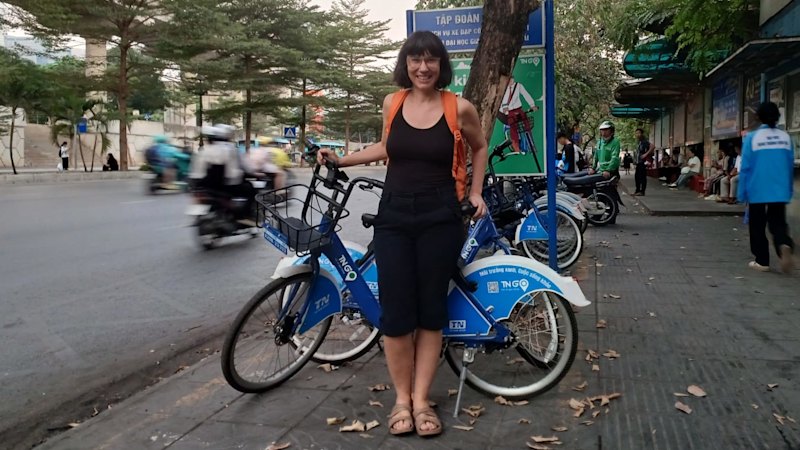
Those aren’t pictures from Brisbane.
In places where biking is well established as a way to get around, people think they don’t need safety gear. But, when a city doesn’t have a lot of bike infrastructure, cars are going to be constantly driving way too close to bikers.
This is an image that’s actually from Brisbane:

Or you could have gone with this one:

From this story: https://www.abc.net.au/news/2020-11-11/many-busy-brisbane-cycling-routes-make-no-allowance-for-riders/12862402
What? I spent years riding a bike. You could literally go buy a bike and 2 minutes out of store. As far as special clothing or anything you don’t need any special clothing. Winter time you wear your winter stuff summertime you wear your summer stuff. That’s about it. You put on a helmet that you buy at the same place you buy your bike at. And that’s all you need to do. You can literally jump online and have it delivered same day as well. And you don’t even have to go anywhere. That’s not the issue in getting a bike and using it for those 20 days.
You only need special clothes if you are a wanker, everyone else just wears their normal clothes
Wankers is quite harsh
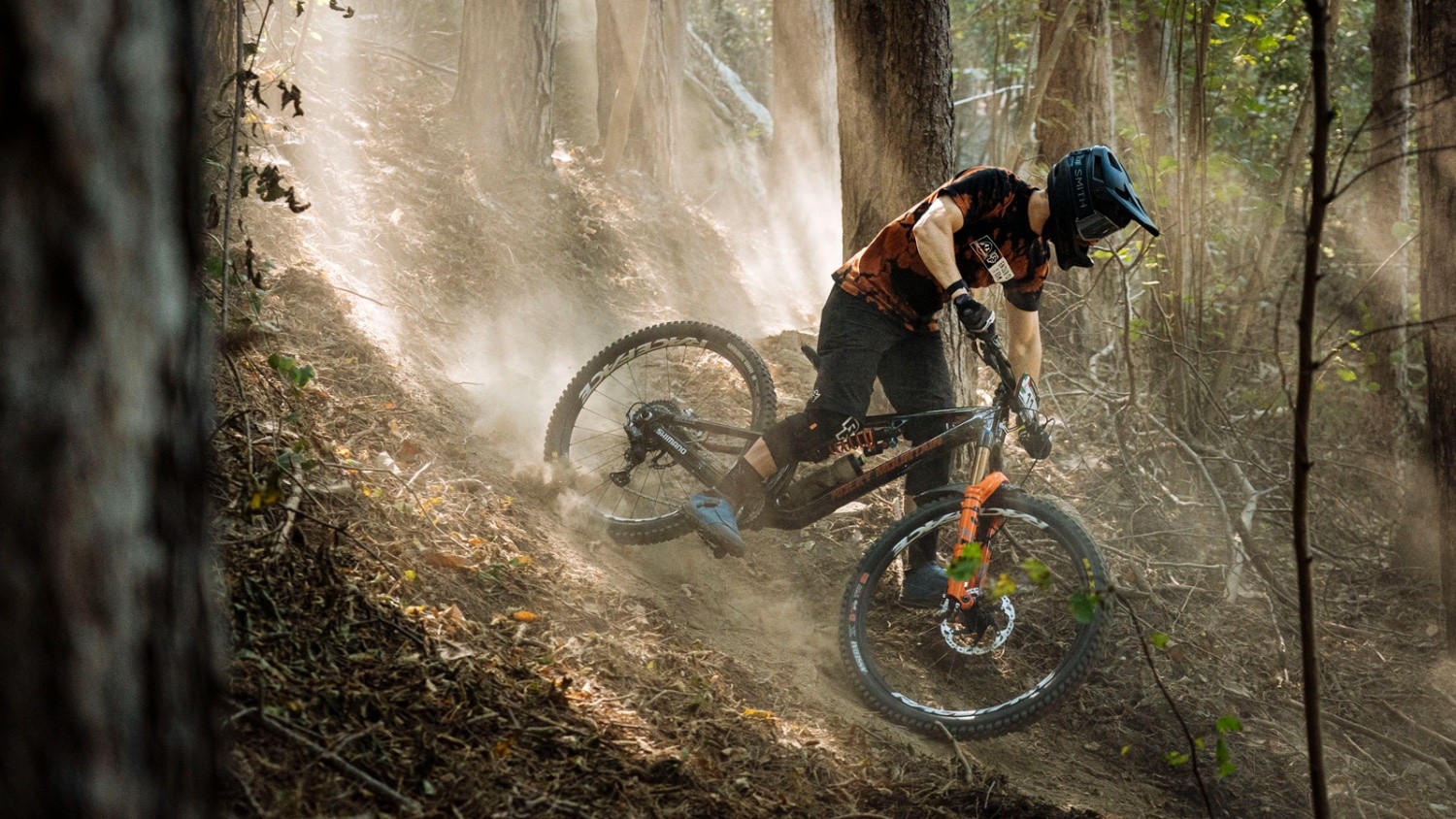
Let them feel sexy on their bike, if they want toYou need special clothes (full face helmet, kneepads, ripstop breathable clothing) if you ride downhill or enduro. But normal everyday riding you really just need a helmet unless you’re a new rider.
wankers
Yeah, I already covered that
You think someone riding downhill is a wanker? I’m guessing you’ve never tried it if you think that.
This is the gear i’m talking about:
I guess, that was in jest, also anyone can be a wanker if they want to
Yeah twas in jest, I should have put /jk
Twas in jest, I should have put a /jk
“However, researchers found given participants were likely to slightly reduce their reliance on cars, it showed experiencing car-free living, even briefly, could help people break away from automobility.”
I think this is an important secondary take away here. Reducing car use is still much better than continuing at current rate. (Similar to eating less meat vs going vegan cold turkey).
Owning a car does come with large sunk-costs tho - so you won’t feel the full financial benefit from just reducing car use (still have to pay rego, insurance, maintenance etc.)Yeah, that’s bcz most towns/cities are not set up to be walkable. And nobody wants to carry groceries miles back to their house. We’ve set up society in a way that not owning a car is a nonstarter.
You get the mobility you build your cities for. Cites were not built for cars (most of them at least), they were transformed into car cities (which took decades). Thing is, cities can also be transformed back into transit oriented cities. Both takes time and commitment though.
The Dutch were on the same “train” to total car dependency in the 1960s. But during the oil crises in the 70s they put a hard stop to that and reversed course. Now half a century later, most of the country is designed to be attractive for multiple modes of mobility, among others cycling but also transit and yes even driving by car. The latter does not dominate everything however.
They don’t have miles in Brisbane.
It’s not our fault they’re poor.
They’re rich in SI units
Australia is poor?
T’was a joke abou them lacking miles as if it were a thing they did not possess as opposed to a measurement they do not use.
A mile is a mile no matter where.
You’re in an international community. Why not use a standard unit of measure?
They weren’t using it to describe a specific measure, just to express a general sentiment - why take this one so personally?
Just trying to stop the further Americanisation of the internet.
The US did… develop it, it’s more the de-americanization of the internet, which itself is a noble goal sure. But while it’s a good goal to strive for, 50% of the internet is english - and of english language speakers, 23% of them are from the US. It’s probably much more useful for you to focus on promoting the use of non-US tech companies / social media / web services than to try to enforce the purity of casual language.
The “internet”, yes. But the web, http, etc was all invented by the English. You guys can claim email if you want.
I’m on a non-US instance of Lemmy on a post about a non US city.
I’m not the person who originally made the ‘mile’ comment, but surely you can give grace to somebody using the unit they are most comfortable with when making a generic statement. Like if a Brit used the word “colour.” We get the point.
Of course, the argument that metric units should be used everywhere has merit, but way way way above the level of an internet post.
Ive been car free my entire life and I will continue to do so for the rest of my life
Same here!
Or until you start a family.
Ah yes, I forgot it’s impossible to ride public transport with kids…
Public transport has routes and stop where they are planned to stop.
Maybe you’re lucky and it will not be far from every of many places you have to be that kids can walk the rest of the way.
I knew 2 people who definitely wouldn’t get a car after getting a kid.
First one got a car almost immediately because difficult.
Second one took about a year. She ran out of people to guilt people in helping the poor single mom.
Our systems are not perfect, you can ask people in wheelchairs how difficult they have it to get around.
And I see a lot of cargo bikes now, sometimes with 3 kids.
All great in theory.
But our bike paths were not designed for these relatively huge things. It creates dangerous situations.
Not to mention how fast they can go since all of them are electric.My wife insisted I get a driver’s license when we had kids, because she didn’t want to be the only one taking them everywhere. Usually I’m the one taking them places. And still on my bike or by public transport most of the time.
I’m car free with 2 kids. Everyone thinks it’s harder, like kids like driving in traffic. No, it’s not. We do local things or get public transport. No parking hassles.fine to have a drink with lunch.
i have a family. living with a small child in an american city without a car is entirely possible. you lose the ability to go out (either to city or to nature) but with a small child you don’t have time to do that anyway so you might as well pay more to live closer to your job. alternative is paying the difference in rent for a car loan and loosing the time you don’t have while sitting in traffic. big caveat: this works only if you earn enough to be able to afford living close to a city center in the first place. also, it is still way less comfortable than a life in a developed european city.
alternative is paying the difference in rent for a car loan
Why do you have to take an expensive loan to get a car? Is there no used car market in US? I live in a bit different reality, and here there’s thriving market at any price tag. You have to do the research, pay for paint thickness check to ensure car didn’t get wrapped around a tree, but getting very cheap used car to drive your ass from point A to point B is absolutely a thing.
Is there no used car market in US?
There is, but prices on anything that doesn’t require constant repairs is still fairly expensive.
Buying a used car is always a crap shoot, but things aren’t as bad as the old days. It used to be that you really didn’t want a car with more than 100,000 miles, but today, any car will make it well past 200,000.
I’ve bought numerous cars with over 100,000 miles, and didn’t need any more than the normal amount of maintenance for a 100k vehicle.
Nah US has used cars, got mine for like $6000 a few years ago when prices were kinda high.
yeah, having kids in sports would be insane without a car. Practice is in two separate towns, multiple times a week, real meets are in other major cities.
You couldn’t get them to where they need to be with US public transport.
We got a bigger car than I would like because my stepdaughter decided that she wanted to be a hockey goalie. 🙈
Why do kids have to go to different cities to play? There are enough kids in nearby schools
There are enough kids in nearby schools
Maybe in a big city. The district I worked the most for was big enough that most matches were within the district. But when you think about most small towns, which maybe have one or two high schools, that’s not going to be true at all.
Even with that - are the nearby schools the same division? Lots of sporting leagues have restrictions on who can play who (bigger schools playing bigger schools instead of smaller ones, an attempt to be fair usually).
Heck, even leaving sports out I drove an hour out for a FIRST tournament recently.
Small towns almost always need personal transport. But the definition of a small town in US is much bigger than most other developed places (my experience is EU, SKorea, Japan)
If it’s a small town, there’s not going to be many big or small schools. Why such a weird system 😅
If significant travel is required, the school should organise travel and stay. Unless the kid is participating in state level at U-12, there is no significant travel for play in Japan and Germany (for popular sports). The kid is a kid afterall. And study is also important
But the definition of a small town in US is much bigger than most other developed places
This is the type of town that I had in mind when I was writing my comment..
Closest high school is Elk City, which you have to drive to, on the interstate. There is no public transit anywhere on this map.

When I was in high school, our track team all met at the high school and got on a bus to the other schools matches, often they were long rides. However, the school provided the bus transpo. I think that was true for all the HS sports leagues. I think the same occurred for the middle school. The elementary school? I don’t know, I don’t think they had inter-school sports. Mostly kids were in local leagues where businesses sponsored teams and they played in local parks. (At least that was how it was in a village I lived in Long Island. We had a few ballfields and just rotated through them. For winter sports like basketball, they used the church gyms and local rec center. Believe me, my parents never drove us to any activity other than a school drop off.
we get it, you’re rich
we get it, you’re rich
everyone has their own definitions, sure are a LOT of rich people in this thread :)
Also you, probably: “There are no atheists in foxholes”
deleted by creator
I think this small experiment simply demonstrates that ditching cars is not a matter of personal preferences, but a community effort
And a matter of traffic design. You can design places to require a car for everything, or you can design them with bike paths everywhere and a good public transit system.
The system is rigged. If you’re dependent on the bus in a city where everything is miles apart, the buses run every hour and only daytime hours, of course it’s going to suck.
I remember in Australia, trying to meet my friends in the city center. I had a bus scheduled every hour, sometimes it didn’t come though, so I could be waiting over an hour for the bus to take me to the nearest train station. The train was every forty minutes, so it would easily take me two hours to get there. Then I had to hope they showed up too.
I later found I could bike and it would take about an hour.
Brisbane is a shit city for cycling. Who is surprised?
Ask 10 people in Amsterdam and half would tell you they already haven’t used a car in weeks. The only ones who’d have a problem with it are those who work far away from Amsterdam.
I was amazed by the transformation in Amsterdam when I visited last summer. I’ve been visiting Netherlands for 40 years and always admired their cycling culture but lately they seemed to have almost eliminated cars from the city. As a result it is incredibly quiet, serene and there is no vehicle soot on the buildings, as is the case in London. I could often choose among many different modes of alternative transport in any given location.
The English solution to this problem is ever more stringent penalties on the driver (e.g. ULEZ) which may be profitable but they have been ineffective at reducing the volume of vehicular traffic, pollution, accidents, ad nauseum. We pay a huge price for car culture.
and fat people in Amsterdam are rare, coincidence?
I lived in Amsterdam for 10 years and only got a car when I married someone who lived in the suburbs. Well, actually I still don’t own a car but I can borrow one as needed!
I live in a busy city too and i haven’t driven a car in 8 years. Wouldn’t know where to leave the damn thing either.
I still have a license but I love not having to drive anymore. It was always so stressful.
That’ll be 1.5M€ for a 40m² apartment thanks.
That’s the big problem with nice places to live: they quickly turn into expensive places to live.
The average claim per person for all their travel expenses during the experiment in Brisbane was $125 – but they saved $300 in car costs. “I hadn’t realised how much money my car eats up,” a 43-year-old man from Brisbane said.
Those $300 for 20 days look like just fuel costs. Add the yearly depreciation value of the car (especially bad for new cars), insurance and maintenance costs and it gets even worse.
Even limiting oneself to only a financial viewpoint (which is quite reductive since the are also big Environmental, Health and Social costs), for most people (especially those who live in cities) cars are stupidly expensive for the utility value that they deliver.
Hopefully they got action items out of it - what do they need to work on.
Personally I loved the freedom of not having to deal with a car on a daily basis, but there was too much I couldn’t do.
One of the shortcomings that seems to surprise people is a lack of long term car storage. There will be an extended transition where many people can not give up their cars or think they cannot. Why not help with that? At one point I was driving my car mostly to move it for street cleaning because there was no permanent place to store it. We want the cars off the street to make room for more important road users. Garages in apartment blocks are too convenient and for-profit garages too expensive
You’ll get more people willing to try car-free if you give them a slightly inconvenient place to store their car, until they realize how little they need to use it. I wonder if making it cheap and easy to leave your car at a park and ride at the end of a transit line would work
I used to do this when I lived in New York state and would occasionally travel down to New York city. It was stupidly cheaper to drive (and faster - which WTF whhhhhy). So I would rent a cheap spot in a garage near the outskirts of the city for the day and use public transport for the rest of the day. I remember being mad that it was cheaper and faster to drive and pay to store my car then it would have been to take the train. That’s a problem. Especially when I had a train station in biking distance to my apartment at the time.
I mean, if you search around you can probably find someone willing to rent out driveway or garage space for cheap. Or else if you head to the outskirts of your city or near the industrial areas, you’ll find car/rv storage lots - usually near or part of storage units. So the solution already exists.
I think it’ll be a hard sell to get people to, say, approve government subsidies for parking garages to make it cheaper for people to store cars that they arent even using. Especially if street parking is already free
The point would be to remove/recover street parking for more important uses. Especially in older urban neighborhoods you might have really narrow streets, no room for bicycle or bus lanes. This lets you compromise: car is still possible for those who need it, but less convenient so used less, neighborhood streets have reduced traffic and can be opened for cycling or pedestrians
I mean, if the point is to remove street parking, I’m in favor of that.
I don’t think there should be any real government intervention to then create additional parking, though. Seems like a move in the wrong direction.
What I think would be good instead, though, is ending parking minimums and then declaring that businesses cannot restrict who parks in their lots to only customers. They can charge a fee for the use of their lot, but otherwise anyone can park there for any amount of time. This would vastly expand the amount of long term parking, drastically driving down the price, while also incentivizing landowners to now redevelop their parking lots into something useful
They do that in my town. Finding parking and garages and everything is not even an issue. I feel like you’re more in a much more Cityfied area than I live in. Well I do live in a major match politen area I was making the comment the other day that the majority of the city I live in is more valley and suburbs than actual city. However at all of the train stops throughout the valley there is free parking. And you could even leave your car there for a few days if you wanted to. And at any of the major bus hub areas there’s also large lots and free parking. They even provide random park and ride lots throughout the outer suburb areas so you are encouraged to carpool.
We’re probably more city. While it’s effectively a suburb to a major city, it was built out pre-car with a nice walkable downtown with larger buildings and a central business district, including the train/bus station. A small city
While there’s parking, it’s all pay, and all signed for no overnight. While there’s enough parking within a few blocks, the train/bus station used to fill up by 8am. It’s not expensive, $3.50/day in my town, but no overnight parking makes it tough.
I was annoyed when even our library started charging for parking, but they have a small lot and complained it was filled up with people looking for cheap parking for the day
As someone who has been without a car for a decade now I’m not sure I could go back. I love walking and biking too much.
My understanding of the study is it is highlighting that without good public infrastructure it is difficult for most people to go car free.
For example, for me, my daily commute is ~20 minutes each way by car. Or ~3+ hours one way by bus, ~5 hours walking, ~90 minutes biking. The closest store to my house is a 20-30 minute bike ride, or hour walk, without sidewalks or bike lanes for most of it, making it rough and dangerous to traverse (Dont get me started on how its an over 1 hour bus ride [yes for a route that takes 40 minutes to walk]) It is its own chiken and the egg, poor infrastructure is justified as not even enough usage but people dont use it because there is not enough non-car infrastructure.