Despite saving hundreds of dollars and even making new friends, none of the people who agreed to ditch their car for this Brisbane experiment wanted to go car-free permanently. This is why.
Article about an experiment from Brisbane, Australia.
Considering it was founded, like, 2000 years ago, that isn’t really surprising. Turns out, being a pedestrian in a city which was established in a millennium when being a pedestrian was the norm is quite easy compared to the same effort in much more recent municipalities. Have you ever really paid attention to the plot of Who Framed Roger Rabbit?
You have very little understanding about city development and planning. Otherwise you’d know that most of the transport corridors that are in use today were started in the Industrialisation period when trams were introduced.
A city with millions of inhabitants can’t be explained by looking at the small population in the centre.
Vienna has an amazingly good and inexpensive public transport system and quite good bike routes combined with fairly inexpensive housing due to good city governance over several decades (social democratic party by and large).
The difference between most North American and European cities in terms of availabke transport choices is not what happened hundreds of years ago, but what city planners did in the post war period (50s to 70s).
It’s not too late however, if you look at the incredible progress Paris had in the past 5 years.
The framework was still established long before cars, which was then easier to expand upon. Absolutely governance has a huge effect, but more modern cities were developed with cars in mind, with endless suburban sprawl. It’s far easier to implement public transportation in places that were originally built around walkable city centers.
Additionally, places that weren’t bombed to hell in WWII didn’t have the opportunity to redesign for public transit mid-century. They grew with car-centric infrastructure and never reset. I’m not saying we shouldn’t develop public transit, we absolutely should, I’m just saying it’s harder to implement with existing infrastructure and layout that spread everything out over dozens of miles.
After World War 2, the Netherlands was bombed to shit, and they rebuilt their cities For The Car! Then in the 90s they realised cars suck, and they started rebuilding their cities for people. Now it’s the best country in the world to drive a car, because there are so few cars on the road.
The moral is, Europe isn’t winning at urbanism because their cities are old, they’re winning because they’re trying hard. Brisbane isn’t trying hard.
Also, the Netherlands wasn’t bombed to shit. There was some bombing here and there with low to moderate damage. Only Rotterdam was pretty much levelled just to make the point during the invasion (and because of a number of other stupid reasons)
The point though is that, yes, the Netherlands decided that levelling Amsterdam to make it a giant car parking lot was a bad idea and they went full bicycle. And yes, its been the best decision ever.
Having said that, i live in Vancouver now and they’ve made some great strides in improving the city for bicycles. If Vancouver can do so, a y other city can do so too…it’s just a matter of wanting
In the Netherlands, this change caused a huge change in architecture as well, because when you restrict cars and push bicycles, you start also making local communities better, making sure that there are smaller local stores, bars, restaurants, within each community, at walking on cycling distances. It has transformed the country over these decades.
Here in American continent countries this can work too, even though the architecture has been messed up so badly because of so many decades of car brain designs. It will take decades to undo the damage, but it can be done
The best country to drive in? Hmm. It’s just as busy as the surrounding countries and traffic speeds off the major roads are painfully low. The standards of driving are surprisingly poor, at least compared to neighbouring Germany. It is very well set up for car alternatives and I really enjoy going car free on my visits there, but there are many countries that are more enjoyable for driving.
But you forget, that we’re living in forest cities with exploding trees!
That this idiot even got a single vote is beyond me…but well, who am I to talk with Kickl promoting the same kind of xenophobia.
But I’m getting a bit off topic, although all those conversatives world wide seem to love to be stuck in their cars in traffic jams…
Vienna is very walkable but also really big. The answer is, mostly, public transport, a lot of it and cheap. Public transport costs ~ 400€ per year if you have the annual pass for Vienna (you can use all public transport). Also at the moment a build out of bike lanes makes a combination of bike/public transport very interesting for big parts of the city.
P.s. Can’t really remember the plot if Rodger Rabbit.


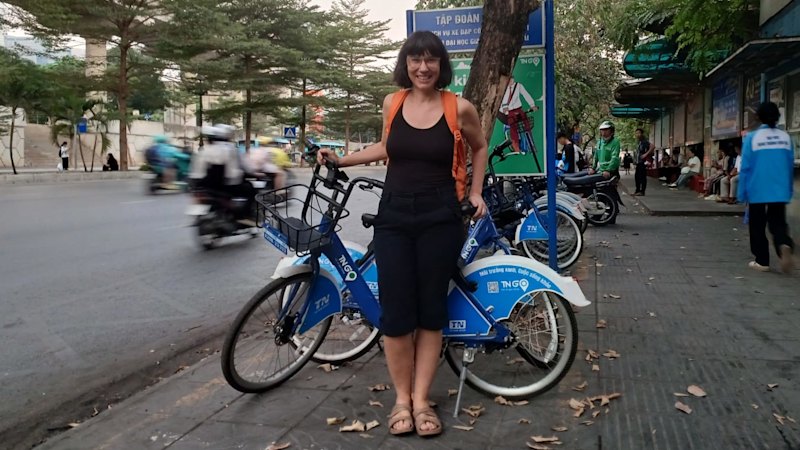
The same was done in Vienna. People did not use their car for 3 months.
Results
German source
Considering it was founded, like, 2000 years ago, that isn’t really surprising. Turns out, being a pedestrian in a city which was established in a millennium when being a pedestrian was the norm is quite easy compared to the same effort in much more recent municipalities. Have you ever really paid attention to the plot of Who Framed Roger Rabbit?
Spotted the American.
You have very little understanding about city development and planning. Otherwise you’d know that most of the transport corridors that are in use today were started in the Industrialisation period when trams were introduced.
A city with millions of inhabitants can’t be explained by looking at the small population in the centre.
Vienna has an amazingly good and inexpensive public transport system and quite good bike routes combined with fairly inexpensive housing due to good city governance over several decades (social democratic party by and large).
The difference between most North American and European cities in terms of availabke transport choices is not what happened hundreds of years ago, but what city planners did in the post war period (50s to 70s).
It’s not too late however, if you look at the incredible progress Paris had in the past 5 years.
The framework was still established long before cars, which was then easier to expand upon. Absolutely governance has a huge effect, but more modern cities were developed with cars in mind, with endless suburban sprawl. It’s far easier to implement public transportation in places that were originally built around walkable city centers.
Additionally, places that weren’t bombed to hell in WWII didn’t have the opportunity to redesign for public transit mid-century. They grew with car-centric infrastructure and never reset. I’m not saying we shouldn’t develop public transit, we absolutely should, I’m just saying it’s harder to implement with existing infrastructure and layout that spread everything out over dozens of miles.
Vienna is a dream for public transit. Didn’t get to use the cycle routes but it seemed I was never far away from any transit. Beautiful city to boot.
After World War 2, the Netherlands was bombed to shit, and they rebuilt their cities For The Car! Then in the 90s they realised cars suck, and they started rebuilding their cities for people. Now it’s the best country in the world to drive a car, because there are so few cars on the road.
The moral is, Europe isn’t winning at urbanism because their cities are old, they’re winning because they’re trying hard. Brisbane isn’t trying hard.
This didnt start in the 90’s, but in the 60’s
Also, the Netherlands wasn’t bombed to shit. There was some bombing here and there with low to moderate damage. Only Rotterdam was pretty much levelled just to make the point during the invasion (and because of a number of other stupid reasons)
The point though is that, yes, the Netherlands decided that levelling Amsterdam to make it a giant car parking lot was a bad idea and they went full bicycle. And yes, its been the best decision ever.
Having said that, i live in Vancouver now and they’ve made some great strides in improving the city for bicycles. If Vancouver can do so, a y other city can do so too…it’s just a matter of wanting
In the Netherlands, this change caused a huge change in architecture as well, because when you restrict cars and push bicycles, you start also making local communities better, making sure that there are smaller local stores, bars, restaurants, within each community, at walking on cycling distances. It has transformed the country over these decades.
Here in American continent countries this can work too, even though the architecture has been messed up so badly because of so many decades of car brain designs. It will take decades to undo the damage, but it can be done
The only necessary ingredient is the will
The best country to drive in? Hmm. It’s just as busy as the surrounding countries and traffic speeds off the major roads are painfully low. The standards of driving are surprisingly poor, at least compared to neighbouring Germany. It is very well set up for car alternatives and I really enjoy going car free on my visits there, but there are many countries that are more enjoyable for driving.
https://dailyhive.com/vancouver/best-place-in-the-world-to-be-a-driver-netherlands
Fair point. We even maintained our 2000 year old skyscrapers here.
But you forget, that we’re living in forest cities with exploding trees!
That this idiot even got a single vote is beyond me…but well, who am I to talk with Kickl promoting the same kind of xenophobia.
But I’m getting a bit off topic, although all those conversatives world wide seem to love to be stuck in their cars in traffic jams…
Vienna is very walkable but also really big. The answer is, mostly, public transport, a lot of it and cheap. Public transport costs ~ 400€ per year if you have the annual pass for Vienna (you can use all public transport). Also at the moment a build out of bike lanes makes a combination of bike/public transport very interesting for big parts of the city.
P.s. Can’t really remember the plot if Rodger Rabbit.
The villain of WFRR was dismantling the trolley system in order to force people to buy cars and use the freeway system.
Los Angeles was founded in 1781. They didn’t have cars then.
They did, just not with engines.
Then how did they get on the 10?
Same way they do now. You just don’t.
Yes we get it it colonists living on stolen land have all the room in the world to be able to vroemvroem their fatass everywhere