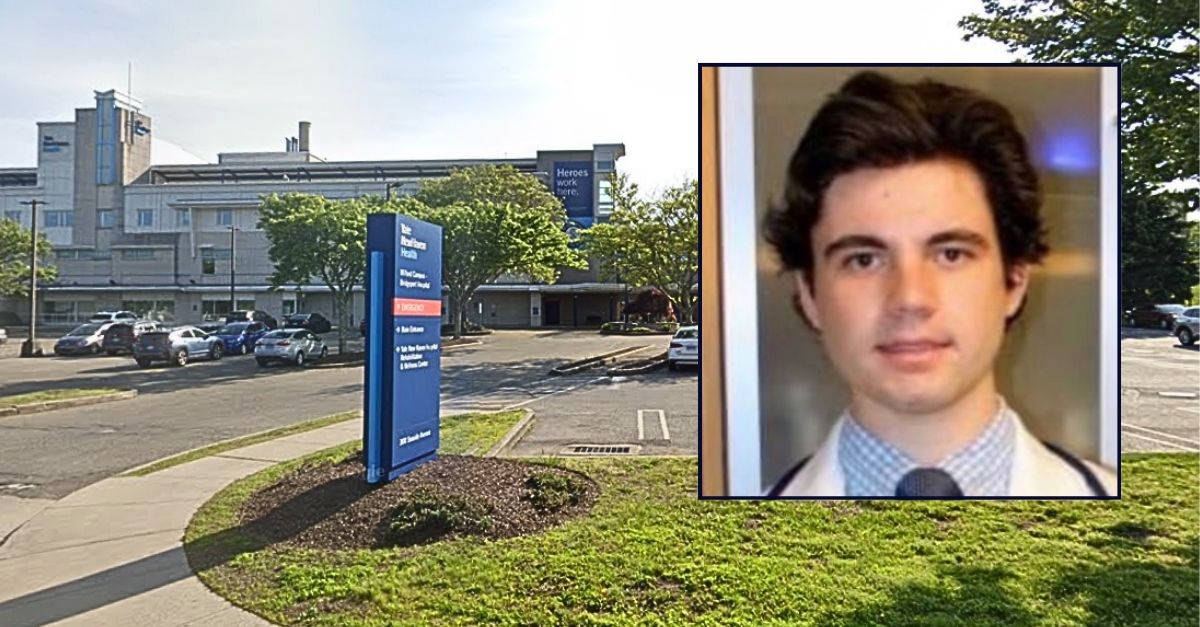
A 26-year-old dental student in Connecticut died in an intensive care unit that was overseen by a remote "tele-health" doctor who pronounced him dead on a video screen, a lawsuit says.
I’ve been waiting for this since the 1990s, surprised it took so long.
Starting in the 90s, much of the administrative duties of a hospital are now done overseas, including chart notes.
The doctors being overseas? Worst case scenario is just starting.
Why would a hospital pay a US physician 200K a year when they can get a doctor from Pakistan to do the same work for 50K a year? They even have surgical robots that can be remotely piloted from anywhere.
This should have been such a straightforward case too.
Mr. Hylton’s condition deteriorated in the ICU, and despite orders, there are no CIWA assessments, no intake/output monitoring, and no MD assessments for pain and/or change in mental status despite the RN’s non-contemporaneous note indicating mental status change in a patient diagnosed with alcohol withdrawal and a history of alcohol withdrawal seizures for which he had “previously been given Keppra.”
Hylton, who was admitted around 11 a.m., became unresponsive early the next morning around 4:30 a.m., the complaint says.
“Mr. Hylton slid down in bed, his eyes rolled back and he … exhibited seizure-like activity, vomited, became bradycardic and code was called,” the complaint alleges. “He was intubated, but he could not be resuscitated, and he was pronounced dead.”
What the fuck were they even trying to do? Some kind of tough love/cold turkey approach? Honestly wouldn’t be surprised bc I’ve heard a lot of ignorant pieces of shit suggest that should be standard protocol for opiate withdrawal.
Aside from that being intentionally and unnecessarily cruel, there’s this tricky thing about alcohol withdrawal vs withdrawal from other “more serious” substances, where you can literally fucking die. That’s exactly what happened.
…the designer benzodiazapines are taking the symptoms your describing to a whole new level.
The equivalent of thousands of alprazolam tablets can be acquired for a few hundred bucks. Addicts think they hit the jackpot when they get access to them, but they can be outright killed by the withdrawal. There is no ceiling for GABA A tolerance, so there is no ceiling for the withdrawal.
He wasn’t going through opioid withdraw, he was going through alcohol withdrawl, which can be just as dangerous cold turkey quitting. Alcohol has non specific effects in the brain, inhibiting excitatory neurotransmission by acting on NMDA receptors, and accentuating inhibitory transmission by acting on GABA receptors. Stopping cold turkey causes hallucinations and seizures due to the jump in excitatory neurotransmission. Keppra is an anticonvulsant that blocks high voltage gated calcium channels, which I sort of feel is an inappropriate medication on it’s own, might have been better to pair it with a low does of memantine/ketamine or a benzodiazapine class drug.
See, when I first started hearing of those remote control surgical robots, it was sold to me like “They’re for remote places where you can’t quickly get to a metropolitan hospital, like the South Pole research station, or Nome Alaska, or the space station. Someone in Nome goes down with gallstones in the winter, getting them to Anchorage may be a problem, this would allow a doctor to remote in care that wouldn’t otherwise be available.”
See you’re just thinking of pro-social applications for tech. Nothing wrong with that. One day the world will be better and we’ll need creativity and positivity rather than nihilism. In the meantime, some cynicism is warranted.
Based on what I’m reading, the problem was he wasn’t administered benzodiazapines for the withdrawal symptoms. This combined with alcohol induced organ damage were contributing factors.
I feel as though most doctors would have been reluctant to prescribe a sedative. The more liberal they are with prescribing sedatives, the more likely their practice is to be overwhelmed with drug addicts.
…it will be interesting to see how this plays out in court.
The issue is that these surgical robots are a goldmine for companies specializing in medical devices. I work for one. They look fancy, they’re available to buy on loan if you can’t afford the several million dollars, and they sound modern.
Meanwhile, the instruments are not cross-compatible (meaning you can’t run Medtronic instruments on a US Medtech robot, for instance), so while they’re reusable and sterilizable (unlike most other handheld devices which are designed to be one-case-only), you have to buy a whole suite of endocutters, staplers, and whatever else you want that robot to be able to do in order to make it do that. PLUS there’s a proprietary computer system, an imaging system, the software to run those, often a televisual rig at the other end for the surgeon to run…you can get really pricey for these, real quick, and that’s not to mention the staple cartridges, the trocars, all sorts of stuff that can be proprietary.
I think now as things advance with AI and the US government is completely corrupt/dysfunctional some company is going to make a med bed with an array of sensors and AI.
One of the oligarchs will bless us with this technology and they will get a shit ton of money from the government, so long as the big guy gets his cut.
Why would a hospital pay a US physician 200K a year when they can get a doctor from Pakistan to do the same work for 50K a year?
Liability to the hospital if a remote doctor fucks up? Just for starters.
It’s also very difficult to manage remote workers. As a result, that $50k Pakistani doctor needs another $50k Pakistani contract manager and a Pakistani HR manager and a nurse who can communicate fluently with both patient and doctor and software that an IT firm needs to maintain and a lawyer to sort out all the messy details of licensing and practice.
At the end of the day, it isn’t nearly the cost savings you’re promised.
Every outsourcing gambit plays out this way. Which makes it more of a negotiating ploy against local workers. Threatening to outsource is far more profitable than actual outsourcing.

I’ve been waiting for this since the 1990s, surprised it took so long.
Starting in the 90s, much of the administrative duties of a hospital are now done overseas, including chart notes.
The doctors being overseas? Worst case scenario is just starting.
Why would a hospital pay a US physician 200K a year when they can get a doctor from Pakistan to do the same work for 50K a year? They even have surgical robots that can be remotely piloted from anywhere.
It’s not prevalent yet, but it will be.
This should have been such a straightforward case too.
What the fuck were they even trying to do? Some kind of tough love/cold turkey approach? Honestly wouldn’t be surprised bc I’ve heard a lot of ignorant pieces of shit suggest that should be standard protocol for opiate withdrawal.
Aside from that being intentionally and unnecessarily cruel, there’s this tricky thing about alcohol withdrawal vs withdrawal from other “more serious” substances, where you can literally fucking die. That’s exactly what happened.
…the designer benzodiazapines are taking the symptoms your describing to a whole new level.
The equivalent of thousands of alprazolam tablets can be acquired for a few hundred bucks. Addicts think they hit the jackpot when they get access to them, but they can be outright killed by the withdrawal. There is no ceiling for GABA A tolerance, so there is no ceiling for the withdrawal.
It’s simpler to believe he just got lost in the system - no treatment is similar to intentionally not treat
He wasn’t going through opioid withdraw, he was going through alcohol withdrawl, which can be just as dangerous cold turkey quitting. Alcohol has non specific effects in the brain, inhibiting excitatory neurotransmission by acting on NMDA receptors, and accentuating inhibitory transmission by acting on GABA receptors. Stopping cold turkey causes hallucinations and seizures due to the jump in excitatory neurotransmission. Keppra is an anticonvulsant that blocks high voltage gated calcium channels, which I sort of feel is an inappropriate medication on it’s own, might have been better to pair it with a low does of memantine/ketamine or a benzodiazapine class drug.
See, when I first started hearing of those remote control surgical robots, it was sold to me like “They’re for remote places where you can’t quickly get to a metropolitan hospital, like the South Pole research station, or Nome Alaska, or the space station. Someone in Nome goes down with gallstones in the winter, getting them to Anchorage may be a problem, this would allow a doctor to remote in care that wouldn’t otherwise be available.”
That was, of course, bullshit.
See you’re just thinking of pro-social applications for tech. Nothing wrong with that. One day the world will be better and we’ll need creativity and positivity rather than nihilism. In the meantime, some cynicism is warranted.
Wasn’t me doing the thinking, that’s what I was told this tech was developed for.
It wasn’t. It was designed to kill a dental student in an ICU devoid of actual medical professionals.
I’d wager a guess that the designer had what you described in mind, but someone else did not.
Based on what I’m reading, the problem was he wasn’t administered benzodiazapines for the withdrawal symptoms. This combined with alcohol induced organ damage were contributing factors.
I feel as though most doctors would have been reluctant to prescribe a sedative. The more liberal they are with prescribing sedatives, the more likely their practice is to be overwhelmed with drug addicts.
…it will be interesting to see how this plays out in court.
No, that was the pitch. I remember it just like you do.
It just…isn’t working like that right now.
Doesn’t mean the technology can’t do that. Just means there’s capitalism in the way.
“This is the song that never ends…it just goes on and on my friend”
The issue is that these surgical robots are a goldmine for companies specializing in medical devices. I work for one. They look fancy, they’re available to buy on loan if you can’t afford the several million dollars, and they sound modern.
Meanwhile, the instruments are not cross-compatible (meaning you can’t run Medtronic instruments on a US Medtech robot, for instance), so while they’re reusable and sterilizable (unlike most other handheld devices which are designed to be one-case-only), you have to buy a whole suite of endocutters, staplers, and whatever else you want that robot to be able to do in order to make it do that. PLUS there’s a proprietary computer system, an imaging system, the software to run those, often a televisual rig at the other end for the surgeon to run…you can get really pricey for these, real quick, and that’s not to mention the staple cartridges, the trocars, all sorts of stuff that can be proprietary.
I shudder to think about my surgeon having to deal with a 400ms ping to the fucking robot cutting me open and how badly that could go…
I think now as things advance with AI and the US government is completely corrupt/dysfunctional some company is going to make a med bed with an array of sensors and AI.
One of the oligarchs will bless us with this technology and they will get a shit ton of money from the government, so long as the big guy gets his cut.
Didn’t he already put out a fluff video with ai generated images of basically that, like almost a year ago?
Yes that’s exactly what I was thinking about!
Liability to the hospital if a remote doctor fucks up? Just for starters.
It’s also very difficult to manage remote workers. As a result, that $50k Pakistani doctor needs another $50k Pakistani contract manager and a Pakistani HR manager and a nurse who can communicate fluently with both patient and doctor and software that an IT firm needs to maintain and a lawyer to sort out all the messy details of licensing and practice.
At the end of the day, it isn’t nearly the cost savings you’re promised.
Every outsourcing gambit plays out this way. Which makes it more of a negotiating ploy against local workers. Threatening to outsource is far more profitable than actual outsourcing.