My favorite part about data centers in space is it may actually be impossible from a physics standpoint to build the heat radiators large enough for even a small one. Even though space is cold and would seem to make sense, it is also a destructive vacuum and to radiate even a small amount of heat outside of a shielded core would take a huge array of radiators
For basically any “space datacenter” scenario, imagine putting that same thing in a vast desert instead. You’ll find it’s easier and an order of magnitude cheaper.
If it is a double-sided radiator panel, the physical panel area could be about half:
2,530 m² of panel, about 50 m × 50 m, assuming both sides radiate effectively.
Also temperature matters enormously so
At emissivity 0.85:
Radiator temp
Area for 100 MW
300 K
~256,000 m²
500 K
~33,200 m²
800 K
~5,100 m²
So the answer is about 5,000 m² (lol this is like “a football field” on each side) at 800 K, but balloons to absurd levels like hundreds of thousands of m² if you are trying to dump room-temperature waste heat which there would be a significant amount of. That is for a single small data center at current power needs. In the US alone data centers use 176 TWh (https://www.congress.gov/crs-product/R48646), so there is no chance we are going to be migrating a significant portion of it into space.
No, it’s totally possible. Not with any technology we’ve ever built, maybe not with any technology we can build, but physics doesn’t preclude it outright.
Your point still stands though. It’s a promise that’s impossible to meet within the lifetime of the investors.


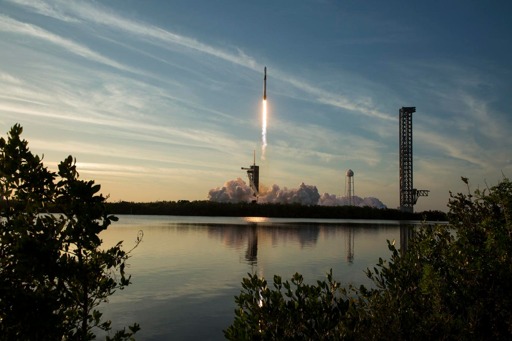
My favorite part about data centers in space is it may actually be impossible from a physics standpoint to build the heat radiators large enough for even a small one. Even though space is cold and would seem to make sense, it is also a destructive vacuum and to radiate even a small amount of heat outside of a shielded core would take a huge array of radiators
It’s possible, but not economical.
For basically any “space datacenter” scenario, imagine putting that same thing in a vast desert instead. You’ll find it’s easier and an order of magnitude cheaper.
Yeah, maybe not impossible, but I mean extremely unlikely. I found a thread on reddit that had examples and a spreadsheet https://www.reddit.com/r/IsaacArthur/comments/11kp7s4/how_large_of_a_heatradiator_would_a_spacecraft/
To run a data center in space you would need some kind of reactor producing around 100 MW. If rejecting 100 MW at 800 K
A= 100,000,000 / 0.85×5.670374419e−8×800
The number is the Stefan-Boltzmann constant (σ) https://physics.knox.edu/OnlineHW/zTest-PhysicalConstants.html
A≈5,065 m²
So roughly:
5,100 m² of radiating surface
That is a square about:
√(5065) ≈71 m per side
If it is a double-sided radiator panel, the physical panel area could be about half:
2,530 m² of panel, about 50 m × 50 m, assuming both sides radiate effectively.
Also temperature matters enormously so
At emissivity 0.85:
So the answer is about 5,000 m² (lol this is like “a football field” on each side) at 800 K, but balloons to absurd levels like hundreds of thousands of m² if you are trying to dump room-temperature waste heat which there would be a significant amount of. That is for a single small data center at current power needs. In the US alone data centers use 176 TWh (https://www.congress.gov/crs-product/R48646), so there is no chance we are going to be migrating a significant portion of it into space.
No, it’s totally possible. Not with any technology we’ve ever built, maybe not with any technology we can build, but physics doesn’t preclude it outright.
Your point still stands though. It’s a promise that’s impossible to meet within the lifetime of the investors.