32·
4 days agoExcerpt:
Abdelwahab carried bodies from the wreckage, half-closing his eyes so the blood and devastation would not slow him down. He kept going even after the civil defence teams arrived.
“I wore a mask, but I could smell the smoke - and the dead,” he said.
He saw dead bodies of men, women, elders and toddlers. Among those killed was Nader Khalil, who had worked at Rifai Nuts for 35 years.
“He was a nice man. I knew him because he bought water from me every day,” Abdelwahab said. “What did he do to deserve this?”
Excerpt:
One resident of Ras Ein al-Auja in the southern Jordan Valley said harassment targeting his family forced him to leave.
“What pushed me to relocate was the harassment my wife, daughters and daughter-in-law were experiencing. Settlers began approaching the shelters when my son and I left for work,” he said.
“They were watching the women closely, whistling when women went out of the shelters in broad daylight and throwing stones at us at night. I was terrified that something bad might happen to my family because of this constant settlers’ violence when I was away.”
If you disagree tell me one thing about their culture that isnt genocide and rape. They steal too.
Excerpt:
In this context, a former detainee’s testimony is particularly noteworthy. She is a 42-year-old woman from North Gaza, who was arrested in late October 2024 during her forced displacement from Beit Lahia in the northern Gaza Strip. She reported that abuse started at the moment of her arrest, involving deliberate humiliation such as forcibly removing her hijab and leaving her exposed in freezing conditions, while being the only woman among dozens of male detainees.
The woman recounted that she was later transferred to the Sde Teiman camp, where she was forced at gunpoint to strip completely. Soldiers deliberately uncovered her eyes for brief moments so she could witness two soldiers photographing her naked with their phones, combining humiliation with coerced documentation and the attendant risks of public shaming and blackmail. She added that the abuse peaked on the third day of detention, when four masked soldiers took her to a small room containing a metal table fixed to the floor and equipped with surveillance cameras. There, she was shackled to the table and stripped, while two soldiers took turns violently raping her, and the other two documented the assault on film.
The rape and sexual violence were repeated. The detainee stated that she was left bound, naked, and bleeding throughout the night, before the soldiers returned the following day and repeated the assault. She confirmed that she was raped four times over two consecutive days, twice on each day, before being left completely naked in the room, still watched and filmed through the door.
She further testified that the torture later intensified, involving humiliation, coercion, and blackmail. She was moved to another interrogation room, suspended by her hands, and subjected to repeated electric shocks until she lost consciousness, while being shown photos of her rapes and nude images, and threatened with their publication if she did not “cooperate” with Israeli intelligence. This account from the victim suggests that sexual violence was employed as a means to subjugate and break her spirit. Non- consensual recordings were used for blackmail and threats of exposure, aiming to silence her, deter reporting or seeking justice, and create fear both within and outside the detention setting.
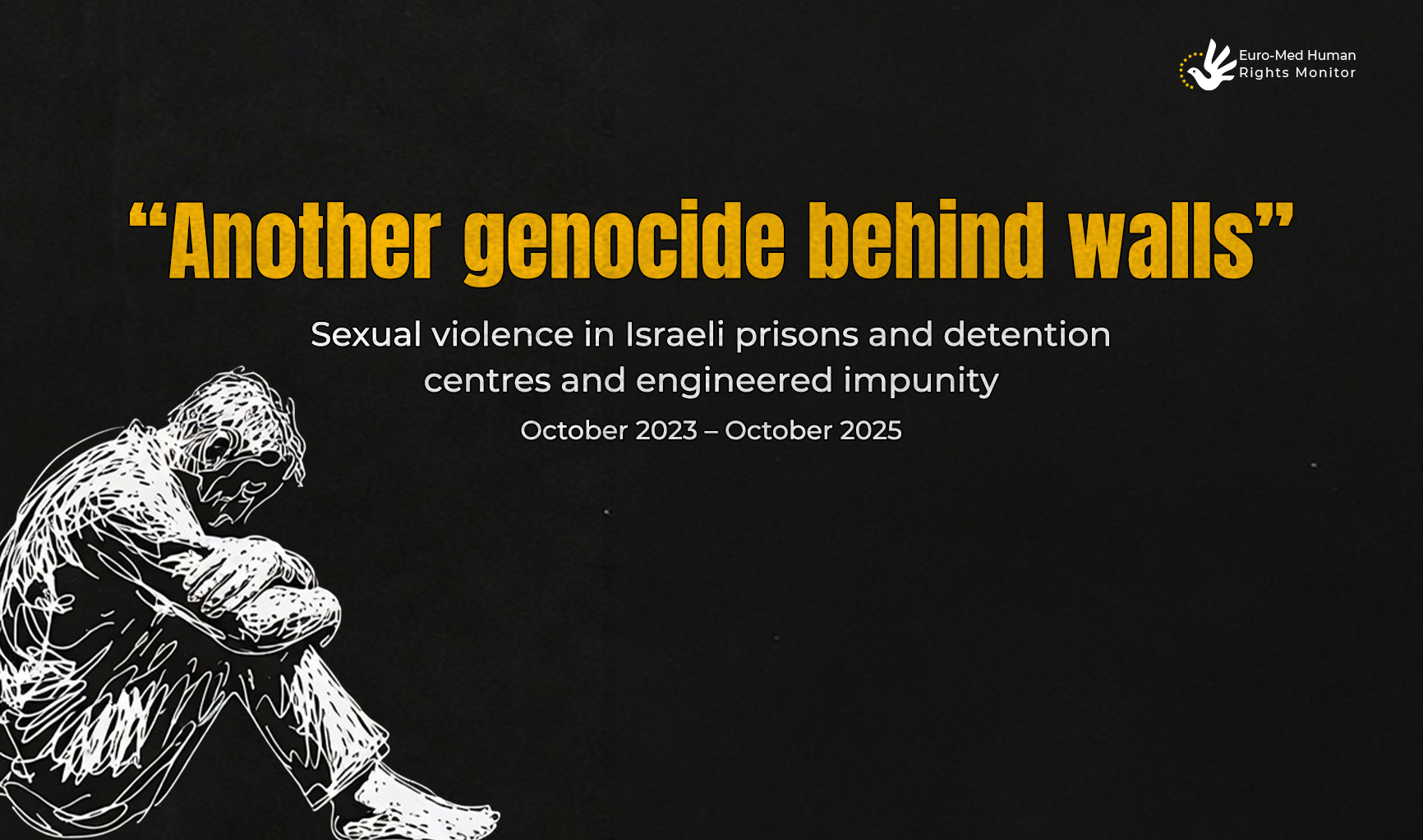
Describing the systematic terror she faced, the victim explained that she used to scream unheard, wished for death rather than remaining bound within their reach, and called her experience “another genocide behind walls.” She mentioned losing track of time in prison, recognising only the number “101,” given by the soldiers instead of her name, symbolising the erasure of identity and the dehumanisation within the detention system.
They seem to still believe in the discredited Biden era philosophy that if you simply do good things people will notice.
Good things like supporting genocidal ethnostates or signing bills to make worker strikes illegal?