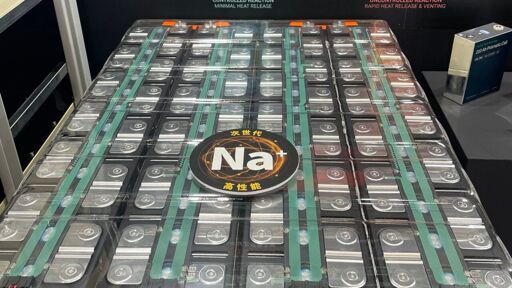
Return_of_Chippy@lemmy.world to Technology@lemmy.worldEnglish · 11 days agoNew sodium-ion battery skips mechanical cooling with 97.9% efficiencyinterestingengineering.comexternal-linkmessage-square94linkfedilinkarrow-up1539arrow-down110file-text
arrow-up1529arrow-down1external-linkNew sodium-ion battery skips mechanical cooling with 97.9% efficiencyinterestingengineering.comReturn_of_Chippy@lemmy.world to Technology@lemmy.worldEnglish · 11 days agomessage-square94linkfedilinkfile-text
minus-squarenanometer1625@thelemmy.clublinkfedilinkEnglisharrow-up8·10 days agoThe article says that they contain NaCrO₂. That means that, by mass, they are 21% Na, 49% Cr, and 30% O. So I’m curious: why are they called sodium batteries, and not chromium batteries?___
minus-squaredavetortoise@reddthat.comlinkfedilinkEnglisharrow-up12·10 days agoPresumably because Na+ ions are the active charge carriers.
minus-squareDeadDigger@lemmy.ziplinkfedilinkEnglisharrow-up2·8 days agoBy mass it would be mostly graphene or water batteries - like always


The article says that they contain NaCrO₂. That means that, by mass, they are 21% Na, 49% Cr, and 30% O. So I’m curious: why are they called sodium batteries, and not chromium batteries?___
Presumably because Na+ ions are the active charge carriers.
By mass it would be mostly graphene or water batteries - like always