According to my information, a split A/C like Midea Porta Split could require about 5-10 kWh a day. Balcony solar panels can easily have an installed power of 2kW. However, at least in Germany they are limited to an output of 800 Watt, for safety reasons (in case the wiring in the home has a low max current). That might be 3kWh a day on sunny days, or or 8kWh if using a battery. So, they will not be able to power all of the A/C, this is right. In that case, stationary installed PV panels would be more economical in the long run - but they are a far larger investment, and the installation costs are, in Germany, relatively high.
But it is much better to do a bit, albeit imperfect, than to require perfection, and do it never.
Another very big factor is building insulation. What helps to avoid heat getting out in the winter, helps equally well to prevent heat getting in in the summer, with the result that much smaller wattages are needed.


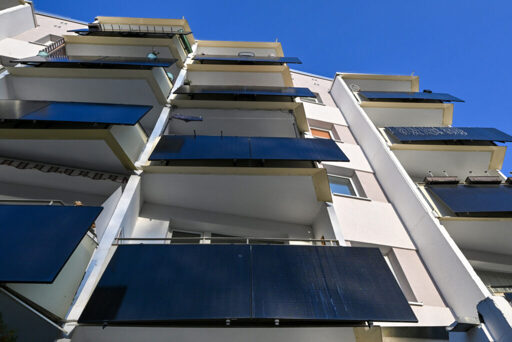
These will not make enough power. They will also shut off automatically when the grid goes down.
https://energytracker.asia/solar-power-shields-pakistan-from-the-hormuz-energy-crisis/
That’s great. This is not that. This is “plug in solar” or “balcony solar”.
According to my information, a split A/C like Midea Porta Split could require about 5-10 kWh a day. Balcony solar panels can easily have an installed power of 2kW. However, at least in Germany they are limited to an output of 800 Watt, for safety reasons (in case the wiring in the home has a low max current). That might be 3kWh a day on sunny days, or or 8kWh if using a battery. So, they will not be able to power all of the A/C, this is right. In that case, stationary installed PV panels would be more economical in the long run - but they are a far larger investment, and the installation costs are, in Germany, relatively high.
But it is much better to do a bit, albeit imperfect, than to require perfection, and do it never.
Yes, there are a number of variables, primarily the temperature delta, and your local regulations.
Another very big factor is building insulation. What helps to avoid heat getting out in the winter, helps equally well to prevent heat getting in in the summer, with the result that much smaller wattages are needed.