And the morning and afternoon will be more profitable than yet another solar installation which peaks at noon. Plus generally, East-West installations can be packed more densely. There is some minimum distance when done on flat surfaces (like on the ground) so the panels don’t cast shadows onto each other. And East-West is a bit better with that, so you’ll get more yield per area. Though doesn’t seem they’re doing that, there could be way more panels on that field.
It must be, as the angle of the panels is too steep in the photo.
However, the panels could theoretically still point in different directions if the panels are set up
East-West. That setup is less efficient but produces electricity at times when it is in demand and more profitable (beginning and end of the day).


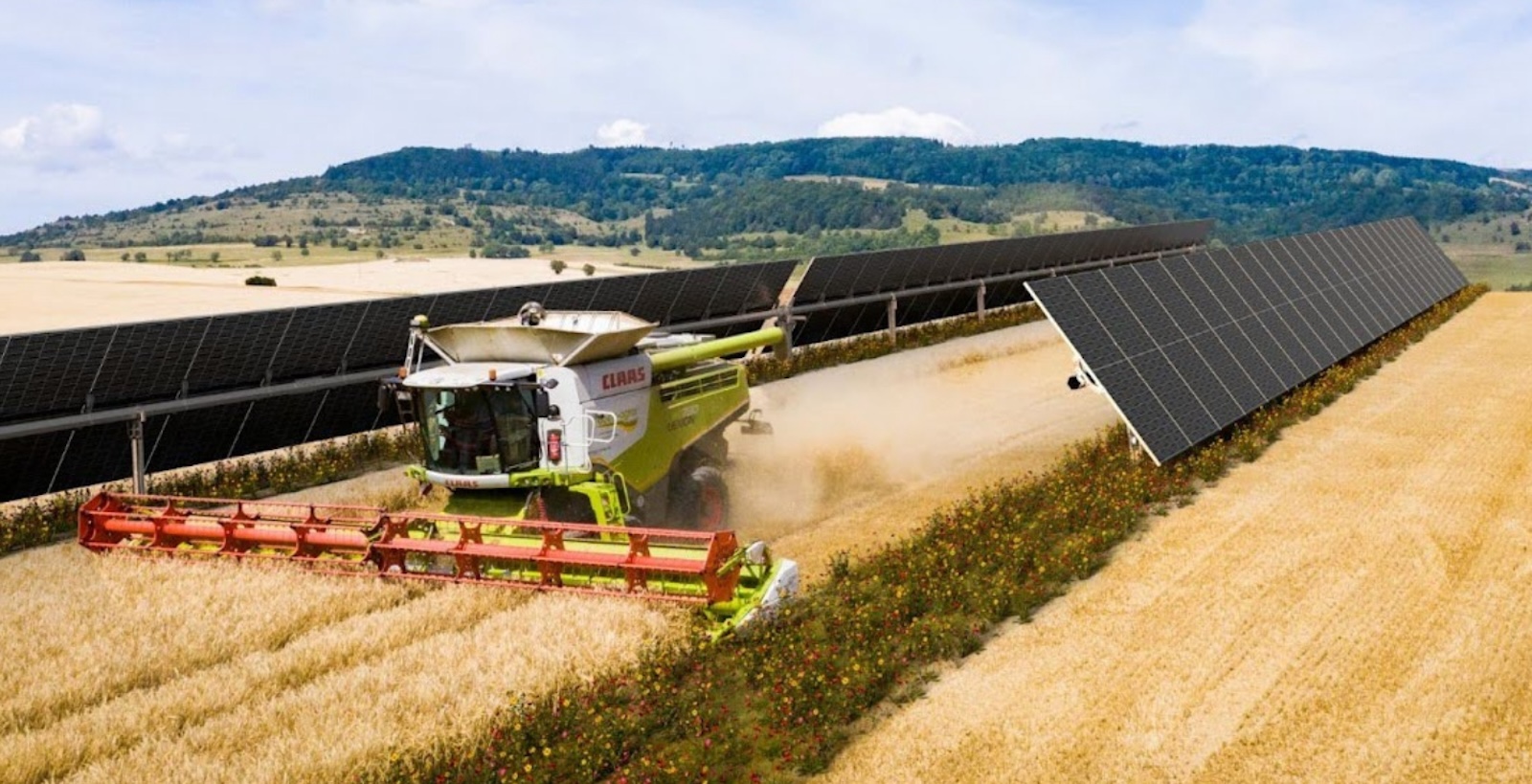
Can anyone explain why the solar panels would be oriented the way they are in that picture? Wouldn’t they be installed to all face the same direction?
My guess is they are aligned with the field’s tramlines that are running N - S. One side captures morning sun, the other the afternoon.
And the morning and afternoon will be more profitable than yet another solar installation which peaks at noon. Plus generally, East-West installations can be packed more densely. There is some minimum distance when done on flat surfaces (like on the ground) so the panels don’t cast shadows onto each other. And East-West is a bit better with that, so you’ll get more yield per area. Though doesn’t seem they’re doing that, there could be way more panels on that field.
I suspect they would have to tilt the panels when harvesting to not damage them?
That makes sense. Wouldn’t want the chaff to get thrown directly at the surface of the panel.
It must be, as the angle of the panels is too steep in the photo.
However, the panels could theoretically still point in different directions if the panels are set up East-West. That setup is less efficient but produces electricity at times when it is in demand and more profitable (beginning and end of the day).