Humans are still better, faster, cheaper at menial work than robots. We’re in the transition, but the adoption curve is still really shallow. The problem here is treating the humans like the robot you wish you had.
We really do need to figure out some variation of UBI for when we hit the steep part of the robot adoption curve. Amazon won’t hesitate to replace humans as soon as robots can actually do the job, but there are a lot of Amazon workers. There are small communities with a high percentage of people working at Amazon. If robots happen those communities will be hit hard and fast. Ideally we would already have a safety net spread out and waiting
While true this is different. Previous automation tended to create more jobs overall. It sucks to be a coal miner in Appalachia but now you have higher paid jobs building, operating, fixing big machines. Society as a whole benefits. Automation really only happened for specific scenarios and there’s always so much that automation couldn’t do
However the new phase of automation, self-driving vehicles, ai, humanoid robots, promise to automate things that only humans could do until now. We may suddenly see a significant percentage of jobs disappear to automation, without creating new jobs for humans. They also promise to be adopted far faster than society can adapt. Businesses become more efficient but overall number jobs goes down . Permanently
Consider Tesla self-driving vehicles. There are already millions of tesla cars out in society that can be self-driving, plus soon tens of thousands of semis. If self-driving succeeds, that could easily be hundreds of thousands of uber and taxi jobs, and tens of thousands of trucker job gone in as little as a year. And no new jobs created
Consider humanoid robots. The promise is mass produced by the hundreds of thousands and easily trainable without the infrastructure and scaling limitations of existing industrial robots. Every amazon warehouse job gone. As fast as they can be shipped. No new jobs created
Consider ai. Previous rounds of automation have helped software developers do more faster better, leading to explosive growth in the field. If ai actually works that would be hundreds of thousands of coders gone, with very few new jobs
Devil’s advocate: wouldn’t it have looked like this to someone early in the industrial revolution as well? They couldn’t have imagined all the jobs that would be created to do things that didn’t seem necessary at the time.
I agree that AI that actually works would be the exception, but IMHO we’re nowhere close right now.
I don’t know what they would have seen: certainly now we see automation has replaced brawn, speed, precision, and it tends to hit specific jobs at a time. Intelligence, creativity, adaptability have remained strengths of humans until now. They probably didn’t have that paradigm but we do: if there’s something humans could still do better, don’t we have the context to have thought of it?
The direct comparison there might be the self-driving cars I mentioned. If that succeeds, it really only replaces one type of job, just like earlier automation. However the difference is the speed it can be adopted and it’s all software so scales orders of magnitude more per new job as a creator. And in the case of Tesla those new jobs are already allocated and the rollout is well underway - just needs software switch to turn it on. Millions of jobs gone. At once.
They probably didn’t have that paradigm but we do: if there’s something humans could still do better, don’t we have the context to have thought of it?
We will have no idea what those new jobs will be, because they’re in new sectors that are only now opening up. So when the internet replaced newspapers, those paper boys became Fortnite streamers, not ISP technicians. I could speculate, but even if I guess correctly it’ll probably sound silly to us.
LLMs have terrible intelligence, creativity, and adaptability. But like most technology, they enhance human efficiency, they don’t completely replace humans. The Jevons paradox tells us that increasing efficiency will increase total demand, not decrease it.
LLMs have terrible intelligence, creativity, and adaptability
But terrible creativity is already enough to make a difference. While I’m typing this I’m also listening to a video of an ai reading an ai generated script. It’s not great: neither authors nor narrators have any reason to fear yet - on quality. But it is entertaining and I don’t have to pay much attention. It’s ai slop that is actually providing value
Maybe. But if new automation replaces menial labor (humanoid robots), drivers, and greatly reduces all sorts of paperwork and even low end “creativity” jobs, and scale vastly more than previous automation, what type of work could those new jobs even be?
They’re not repair nor development nor deployment, they’re not service economy or menial labor, they’re not any variation of driving or most gig economy, fewer are creative, fewer are paperwork jobs or even management …… what’s left are skilled labor, personal services, medical, business owners, and I can’t see any of those making up for millions of jobless people. We can’t all be plumbers or nurses

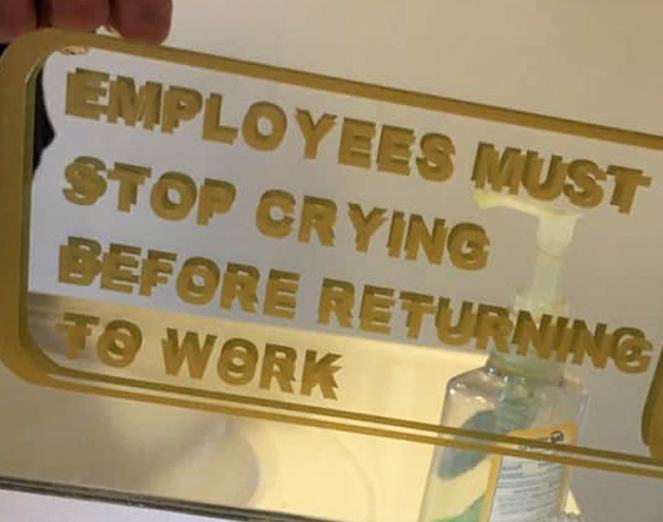

Humans are still better, faster, cheaper at menial work than robots. We’re in the transition, but the adoption curve is still really shallow. The problem here is treating the humans like the robot you wish you had.
We really do need to figure out some variation of UBI for when we hit the steep part of the robot adoption curve. Amazon won’t hesitate to replace humans as soon as robots can actually do the job, but there are a lot of Amazon workers. There are small communities with a high percentage of people working at Amazon. If robots happen those communities will be hit hard and fast. Ideally we would already have a safety net spread out and waiting
We’re already on the steep part of the automation curve! The best time for UBI was a century ago, the second best time is today.
While true this is different. Previous automation tended to create more jobs overall. It sucks to be a coal miner in Appalachia but now you have higher paid jobs building, operating, fixing big machines. Society as a whole benefits. Automation really only happened for specific scenarios and there’s always so much that automation couldn’t do
However the new phase of automation, self-driving vehicles, ai, humanoid robots, promise to automate things that only humans could do until now. We may suddenly see a significant percentage of jobs disappear to automation, without creating new jobs for humans. They also promise to be adopted far faster than society can adapt. Businesses become more efficient but overall number jobs goes down . Permanently
Consider Tesla self-driving vehicles. There are already millions of tesla cars out in society that can be self-driving, plus soon tens of thousands of semis. If self-driving succeeds, that could easily be hundreds of thousands of uber and taxi jobs, and tens of thousands of trucker job gone in as little as a year. And no new jobs created
Consider humanoid robots. The promise is mass produced by the hundreds of thousands and easily trainable without the infrastructure and scaling limitations of existing industrial robots. Every amazon warehouse job gone. As fast as they can be shipped. No new jobs created
Consider ai. Previous rounds of automation have helped software developers do more faster better, leading to explosive growth in the field. If ai actually works that would be hundreds of thousands of coders gone, with very few new jobs
Devil’s advocate: wouldn’t it have looked like this to someone early in the industrial revolution as well? They couldn’t have imagined all the jobs that would be created to do things that didn’t seem necessary at the time.
I agree that AI that actually works would be the exception, but IMHO we’re nowhere close right now.
I don’t know what they would have seen: certainly now we see automation has replaced brawn, speed, precision, and it tends to hit specific jobs at a time. Intelligence, creativity, adaptability have remained strengths of humans until now. They probably didn’t have that paradigm but we do: if there’s something humans could still do better, don’t we have the context to have thought of it?
The direct comparison there might be the self-driving cars I mentioned. If that succeeds, it really only replaces one type of job, just like earlier automation. However the difference is the speed it can be adopted and it’s all software so scales orders of magnitude more per new job as a creator. And in the case of Tesla those new jobs are already allocated and the rollout is well underway - just needs software switch to turn it on. Millions of jobs gone. At once.
We will have no idea what those new jobs will be, because they’re in new sectors that are only now opening up. So when the internet replaced newspapers, those paper boys became Fortnite streamers, not ISP technicians. I could speculate, but even if I guess correctly it’ll probably sound silly to us.
LLMs have terrible intelligence, creativity, and adaptability. But like most technology, they enhance human efficiency, they don’t completely replace humans. The Jevons paradox tells us that increasing efficiency will increase total demand, not decrease it.
But terrible creativity is already enough to make a difference. While I’m typing this I’m also listening to a video of an ai reading an ai generated script. It’s not great: neither authors nor narrators have any reason to fear yet - on quality. But it is entertaining and I don’t have to pay much attention. It’s ai slop that is actually providing value
Maybe. But if new automation replaces menial labor (humanoid robots), drivers, and greatly reduces all sorts of paperwork and even low end “creativity” jobs, and scale vastly more than previous automation, what type of work could those new jobs even be?
They’re not repair nor development nor deployment, they’re not service economy or menial labor, they’re not any variation of driving or most gig economy, fewer are creative, fewer are paperwork jobs or even management …… what’s left are skilled labor, personal services, medical, business owners, and I can’t see any of those making up for millions of jobless people. We can’t all be plumbers or nurses