Despite saving hundreds of dollars and even making new friends, none of the people who agreed to ditch their car for this Brisbane experiment wanted to go car-free permanently. This is why.
Article about an experiment from Brisbane, Australia.
It is really not about Europe or US. Even the US has cities and neighbourhoods that are like that. In most places however, it is illegal to build such places new and their supply is so ridiculously low that most people could not possibly afford to live in such a place, or those places, or those places are so poor and dangerous that they aren’t good places to live for other reasons.
The problem is car centric urban design. Most people don’t get it that they do not only have to drive by car because everything is so far away but everything is so far away because everyone is expected to drive by car. You can change that but it takes a lot of time and the political will to do so.
I live in a center city area, but the problem I have is that it’s a food desert like lots of center cities are. The small independent grocery stores usually have too much shrink to remain open so it leaves me with three options that are all equidistant and not walkable. I fill a 55L messenger bag and transport it via bike but it’s quite uncomfortable carrying that much weight compared to just hopping in a car.
Sounds like part of the problem is that groceries in the US are not designed as proper full sortiment stores. By that I don’t mean being a hypermarket with 1000 flavours of yoghurt but having a broad sortiment, just like an Aldi doesn’t have all that many different products either but they do cover most of the stuff you need. In many cities you find such grocery stores that are still pretty compact on every corner. You really need to go to anything else only if you want something rather special or extraordinary.
I find it pretty strange to consider city centres to be food deserts by default but then, I guess that is the case in many cities in the US, even when they are not entirely car dependent.
One thing that is a key difference in transit oriented places, other than the stores I was talking about above is that shopping habbits are widly different. Shopping more often but buying less. This has pros and cons but as stores are more efficient (good sortiment at compact size) one does not need as long in the store and buying stuff after work means, one can have a lot fresher stuff at home, for example, fresh bread, fresh vegetables, fresh fruits …
Another aspect is drinking habits or rather infrastructure. Where I live, a lot of people don’t buy a lot of drinks, other than the occasional orange juice or and milk. Tap water is great, no need for bottled water and if you like it carbonised, something like Soda Stream is saving you a lot of schlepping.
PS: Every thought about getting an e-bike or a compact cargo e-bike? Still worlds better than wasting fuel for the car for inner urban transportation, if it is safe to ride that is.


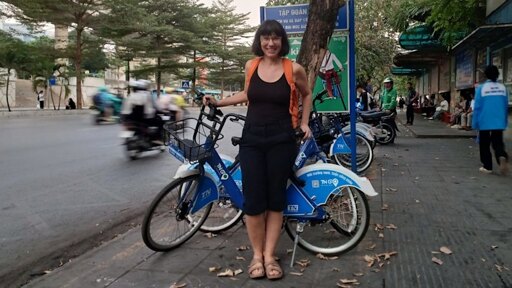
European cities have grocery stores within walking distance. I walk to mine, no problem.
It is really not about Europe or US. Even the US has cities and neighbourhoods that are like that. In most places however, it is illegal to build such places new and their supply is so ridiculously low that most people could not possibly afford to live in such a place, or those places, or those places are so poor and dangerous that they aren’t good places to live for other reasons.
The problem is car centric urban design. Most people don’t get it that they do not only have to drive by car because everything is so far away but everything is so far away because everyone is expected to drive by car. You can change that but it takes a lot of time and the political will to do so.
I live in a center city area, but the problem I have is that it’s a food desert like lots of center cities are. The small independent grocery stores usually have too much shrink to remain open so it leaves me with three options that are all equidistant and not walkable. I fill a 55L messenger bag and transport it via bike but it’s quite uncomfortable carrying that much weight compared to just hopping in a car.
Sounds like part of the problem is that groceries in the US are not designed as proper full sortiment stores. By that I don’t mean being a hypermarket with 1000 flavours of yoghurt but having a broad sortiment, just like an Aldi doesn’t have all that many different products either but they do cover most of the stuff you need. In many cities you find such grocery stores that are still pretty compact on every corner. You really need to go to anything else only if you want something rather special or extraordinary.
I find it pretty strange to consider city centres to be food deserts by default but then, I guess that is the case in many cities in the US, even when they are not entirely car dependent.
One thing that is a key difference in transit oriented places, other than the stores I was talking about above is that shopping habbits are widly different. Shopping more often but buying less. This has pros and cons but as stores are more efficient (good sortiment at compact size) one does not need as long in the store and buying stuff after work means, one can have a lot fresher stuff at home, for example, fresh bread, fresh vegetables, fresh fruits …
Another aspect is drinking habits or rather infrastructure. Where I live, a lot of people don’t buy a lot of drinks, other than the occasional orange juice or and milk. Tap water is great, no need for bottled water and if you like it carbonised, something like Soda Stream is saving you a lot of schlepping.
PS: Every thought about getting an e-bike or a compact cargo e-bike? Still worlds better than wasting fuel for the car for inner urban transportation, if it is safe to ride that is.