As I understand it we’ve identified nucleobases outside of Earth, but not nucleic acids. I don’t personally know how big a step it is between those components and then some actual assembled nucleic acids, but it’s definitely farther removed from what we generally consider to be life.
apparently Mars had a lot of water for quite some time
It did lose a lot, but it also still has quite a lot! It’s just mostly frozen and underground
Space is a really harsh environment and the odds of randomly getting between solar systems in bad before you start talking about survival parameters
While I agree, isn’t that still true for an in-solar-system event? It’s a lot less space, but we’re still going from “a ludicrous distance more than humans can really conceptualise” to “also a ludicrous distance more than humans can really conceptualise even though it’s orders of magnitude smaller”
I do agree that it’s absolutely worth testing, though, because whatever we find or disprove is interesting to know
Yeah, I’m not really a space guy, but let me spitball a few potentially relevant mechanisms.
I know less about the space part, but my understanding was that planets tended to sweep up asteroids near their orbit, but I don’t have a great grasp on how much space that is compared to the likely space an asteroid would end up in after some large collision. There’s also the collisions between asteroids that might scatter about the first life-containing asteroid. To me the largest issue with panspermia has always been the distance between stars and the chances of hitting somewhere that can sustain life once flung out of a solar system. Since that’s presumably much less of an issue for in an solar system event between direct neighbors, it seems a much more viable mechanism.
As for the biology part, I’d point out we’re not talking about fragile complex life. We’re talking microbes. I don’t think it’s too crazy for microbial life to survive in a dormient state for a moderate time. The cold isn’t really an issue since we freeze bacteria all the time in lab with relatively little issue. The dangers are heat and radiation. For heat, I’d point out that if you autoclave soil, apparently a lot of bacteria can hide inside and survive, so you could think of the nooks and crannies of the asteroid as refugia for microbial life. I suspect radiation is the larger issue, and I don’t really know what it takes to shield them or the extent to which it’s possible or necessary – dose and travel time calculations seem most concerning to me.
Anyway, take all that with a grain of salt though because I don’t know what types of asteroids these nucleic acids were found on or how well they do at each of these challenges. I don’t know if these mechanisms are forming a narrative consistent with the data. It could be that I’m missing something about nucleic acids that make them way more common than I’m expecting and that or even some other mechanism is more consistent with the data. I just know what we ought test from a molecular biology stand point (chirality, base similarity, etc).


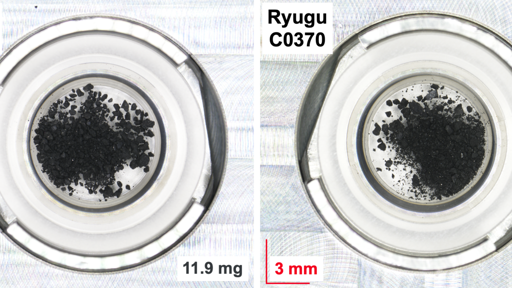
As I understand it we’ve identified nucleobases outside of Earth, but not nucleic acids. I don’t personally know how big a step it is between those components and then some actual assembled nucleic acids, but it’s definitely farther removed from what we generally consider to be life.
It did lose a lot, but it also still has quite a lot! It’s just mostly frozen and underground
While I agree, isn’t that still true for an in-solar-system event? It’s a lot less space, but we’re still going from “a ludicrous distance more than humans can really conceptualise” to “also a ludicrous distance more than humans can really conceptualise even though it’s orders of magnitude smaller”
I do agree that it’s absolutely worth testing, though, because whatever we find or disprove is interesting to know
Yeah, I’m not really a space guy, but let me spitball a few potentially relevant mechanisms.
I know less about the space part, but my understanding was that planets tended to sweep up asteroids near their orbit, but I don’t have a great grasp on how much space that is compared to the likely space an asteroid would end up in after some large collision. There’s also the collisions between asteroids that might scatter about the first life-containing asteroid. To me the largest issue with panspermia has always been the distance between stars and the chances of hitting somewhere that can sustain life once flung out of a solar system. Since that’s presumably much less of an issue for in an solar system event between direct neighbors, it seems a much more viable mechanism.
As for the biology part, I’d point out we’re not talking about fragile complex life. We’re talking microbes. I don’t think it’s too crazy for microbial life to survive in a dormient state for a moderate time. The cold isn’t really an issue since we freeze bacteria all the time in lab with relatively little issue. The dangers are heat and radiation. For heat, I’d point out that if you autoclave soil, apparently a lot of bacteria can hide inside and survive, so you could think of the nooks and crannies of the asteroid as refugia for microbial life. I suspect radiation is the larger issue, and I don’t really know what it takes to shield them or the extent to which it’s possible or necessary – dose and travel time calculations seem most concerning to me.
Anyway, take all that with a grain of salt though because I don’t know what types of asteroids these nucleic acids were found on or how well they do at each of these challenges. I don’t know if these mechanisms are forming a narrative consistent with the data. It could be that I’m missing something about nucleic acids that make them way more common than I’m expecting and that or even some other mechanism is more consistent with the data. I just know what we ought test from a molecular biology stand point (chirality, base similarity, etc).