To fulfill the third wish, the genie must ignore the first wish made. The first wish was to do the opposite of the second, so to fulfill the third wish, the genie must now ignore that command, and do not the opposite not the actual second wish. The second wish, now primed to be fulfilled in earnest, not opposite, was to not fulfill the third. But fulfilling the third is how we got into this situation in the first place, so if it’s not fulfilled anymore, we shouldn’t be in the state we’re in.
To fulfill the third wish, the genie must ignore the first wish made.
These were executed in serial, so the effects have already been committed. Ignoring the first wish at the end had no material effect, because it’s already been executed “flipping the second wish”.
These commands would need to be actively looping before you encountered a runtime error. But the genie isn’t re-evaluating the wish stack after each wish.
I mean, we are talking about a magical genie that can alter the fabric of reality to grant wishes. I trust you can suspend disbelief that the genie cannot change the past to effect those changes.
This assumes that all the wishes are executed at once.
Assume that there are two important points in a wish. The points of utterance and the point of execution. Wishes are executed as soon as possible. As soon as a wish is executed, it is no longer a wish. It simply is.
Consider this sequence:
Wish one is uttered but does not execute until wish two is uttered.
Wish one executes as soon as wish two is uttered and wish two is modified.
The modified wish two is executed as soon as wish three is uttered and modifies wish three.
The modified wish three executes immediately, and wish one may be safely ignored as it has already been executed.
See, it all depends on the assumptions around the mechanics of wishing. It’s pretty important to know the rules before you get started.
My explanation does not at all assume all wishes are executed at once. It does assume that a magical genie with reality altering powers can change the past.
The punchline implies that assumption or parallel processing. It must because it’s inconsistent with the common rules of the myth. Wishes are commonly executed in series, not in parallel, which is impicit in the syntax of the first, second, and third wish. So that assumption of parallel wish processing isn’t even consistent with most of the language of the comic or with the final panel.
Sort of due to a flaw in the syntax; it (almost) boils down to an infinite loop (we’ll fix the syntax to specify “I wish for you to” and use the wish flags ‘!’ = opposite, ‘~’ = ignore/skip (we’ll assume this exhausts a wish still even though it shouldn’t since it doesn’t matter anyway), and for clarity, we’ll make ‘+’ mean no flags/execute normally; all 3 wishes are ‘+’ at the start of the first loop):
“I wish for you to do the opposite of my next wish.” (flag set to do !wish2)
“I wish for you not to fulfill my third wish.” (flag set for +wish3)
“I wish for you to [have ignored] my first wish.” (now ~wish1 was set before you made wish 2; notably, this needs to be retroactive for the loop to start, so the syntax in the OP is wrong).
Now +wish2 was set. But then the flag for ~wish3 was set. But then +wish1 was set (i.e. it was never ignored; this is flawed, however, but author’s logic). Now !wish2 was set. Now ~wish3 was set. Etc.
Every even loop (0-indexed) will be (+, !, +) while every odd one will be (~, +, ~).
That said, a flaw in this logic is that it should actually stop after Loop 1, since wish3 is no longer an active wish; the genie doesn’t have to go back and change anything. You need the wish to be active, not ignored, to break the genie into an infinite loop.
“I wish for you to do the opposite of my first wish.” as wish3 should break 'em.
If the wishes are prioritized from more to less recent, yeah. -which I guess is the trope’s tradition.
But it’s an attempt at a self-referential paradox akin to the liars’ paradox (this statement is false). I think a shorter, but more valid version, would be ‘don’t fulfil this wish’.
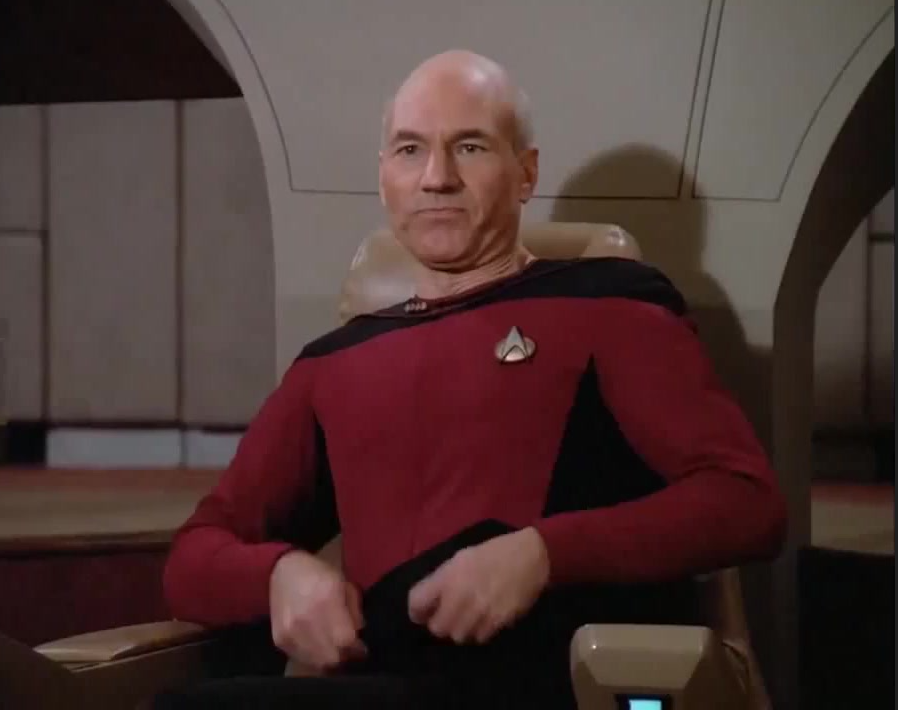


I don’t get it…
It basically boils down to “do nothing”, right?
To fulfill the third wish, the genie must ignore the first wish made. The first wish was to do the opposite of the second, so to fulfill the third wish, the genie must now ignore that command, and do not the opposite not the actual second wish. The second wish, now primed to be fulfilled in earnest, not opposite, was to not fulfill the third. But fulfilling the third is how we got into this situation in the first place, so if it’s not fulfilled anymore, we shouldn’t be in the state we’re in.
These were executed in serial, so the effects have already been committed. Ignoring the first wish at the end had no material effect, because it’s already been executed “flipping the second wish”.
These commands would need to be actively looping before you encountered a runtime error. But the genie isn’t re-evaluating the wish stack after each wish.
Yeah the wording on “ignore” is not the same as “undo all effects of” or “rollback my first wish”
Even so, I think it’s still just a no-op at the cost of 3 wishes.
I mean, we are talking about a magical genie that can alter the fabric of reality to grant wishes. I trust you can suspend disbelief that the genie cannot change the past to effect those changes.
The premise of the joke is pedantry. I reserve the right to be equally pedantic.
This assumes that all the wishes are executed at once.
Assume that there are two important points in a wish. The points of utterance and the point of execution. Wishes are executed as soon as possible. As soon as a wish is executed, it is no longer a wish. It simply is.
Consider this sequence:
Wish one is uttered but does not execute until wish two is uttered.
Wish one executes as soon as wish two is uttered and wish two is modified.
The modified wish two is executed as soon as wish three is uttered and modifies wish three.
The modified wish three executes immediately, and wish one may be safely ignored as it has already been executed.
See, it all depends on the assumptions around the mechanics of wishing. It’s pretty important to know the rules before you get started.
My explanation does not at all assume all wishes are executed at once. It does assume that a magical genie with reality altering powers can change the past.
My first wish is that your wish works the way I imagine it works
The punchline implies that assumption or parallel processing. It must because it’s inconsistent with the common rules of the myth. Wishes are commonly executed in series, not in parallel, which is impicit in the syntax of the first, second, and third wish. So that assumption of parallel wish processing isn’t even consistent with most of the language of the comic or with the final panel.
So you know how they say a joke is like a toad: it dies when you dissect it but you learn a lot in the process? Sometimes those toads fart dude.
This comic wasn’t particularly funny to me to begin with. The above dissection is why. This toad was dead on arrival.
sorry, to explicit my metaphor, i was saying that the dissection is sometimes also funny because who doesn’t love a fart joke.
No denying that I often interpret things in a comically literal way. No offense taken. Farts are funny.
well now that you said no offense i’m offended
Sort of due to a flaw in the syntax; it (almost) boils down to an infinite loop (we’ll fix the syntax to specify “I wish for you to” and use the wish flags ‘!’ = opposite, ‘~’ = ignore/skip (we’ll assume this exhausts a wish still even though it shouldn’t since it doesn’t matter anyway), and for clarity, we’ll make ‘+’ mean no flags/execute normally; all 3 wishes are ‘+’ at the start of the first loop):
Now +wish2 was set. But then the flag for ~wish3 was set. But then +wish1 was set (i.e. it was never ignored; this is flawed, however, but author’s logic). Now !wish2 was set. Now ~wish3 was set. Etc.
Every even loop (0-indexed) will be (+, !, +) while every odd one will be (~, +, ~).
That said, a flaw in this logic is that it should actually stop after Loop 1, since wish3 is no longer an active wish; the genie doesn’t have to go back and change anything. You need the wish to be active, not ignored, to break the genie into an infinite loop.
“I wish for you to do the opposite of my first wish.” as wish3 should break 'em.
oooh, that makes sense, if you change the wording like that…
Exactly. I don’t know why people are assuming that genies loop back on granted wishes.
If the wishes are prioritized from more to less recent, yeah. -which I guess is the trope’s tradition. But it’s an attempt at a self-referential paradox akin to the liars’ paradox (this statement is false). I think a shorter, but more valid version, would be ‘don’t fulfil this wish’.