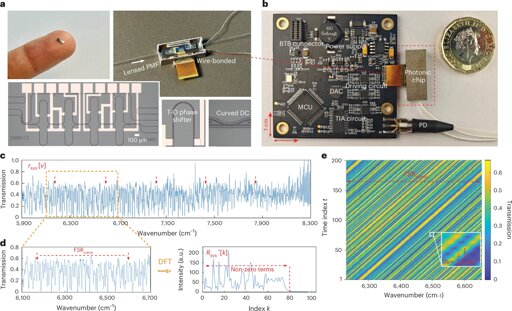
Researchers from the University of Cambridge and GlitterinTech, a startup founded by the same research group, have unveiled a fundamentally new type of optical spectrometer that delivers laboratory-grade precision in a device small enough to be embedded in portable and wearable technologies. By rethinking how spectra are measured and processed, the team has demonstrated a spectrometer costing only around $10, operating at a centimeter scale, and capable of applications ranging from industrial quality control to real-time health care monitoring.


I am not 100% sure, but I think that the designer bears the cost of the wafer yield.
The PDK is specific to the manufacturer, and I imagine that the risk associated with specific features is known and the yield range can be estimated. A design with more and riskier the features would lower the expected yield, and it makes sense that this risk gets passed onto the designer. The contract may have some protections for the case when the yield is significantly lower than expected because of the manufacturer’s fault. Just a guess though, it would be great if someone with real experience can answer.