

cross-posted from: https://mander.xyz/post/49358010
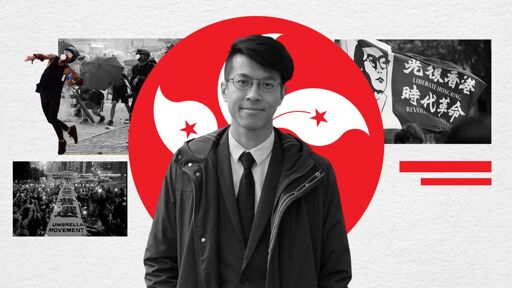
- Ray Wong, a prominent Hong Kong pro-democracy activist, sought asylum in Germany due to threats of imprisonment for his activism against Beijing’s influence.
- Wong highlights how Hong Kong is used by Russia to bypass Western sanctions, leveraging its business environment and lack of enforcement of non-UN sanctions.
…
At a fundamental level, what we [Hongkkongers and Ukrainians] are fighting for is the same. It is about independence and agency. We don’t want our lives, our future, or our political system to be dictated by someone else. In the end, it is about self-determination – the right to decide what kind of country, what kind of nation we want to be.
For Ukraine, the main obstacle is Russia. For us in Hong Kong, the obstacle is Beijing. But the logic is the same. Both Russia and China are authoritarian regimes. They are driven by power and control, and they seek to expand their influence as much as possible.
So in that sense, we are fighting for the same values and against the same type of system …
Ukrainians understand China very well – in many ways, Russia plays the same role for Ukraine as China does for Hong Kong … there is also real solidarity between our communities. Some Ukrainian organizations have been very supportive of the Hong Kong movement. For example, there is a Free Hong Kong Center that was founded by Ukrainian activists.
In countries like the United Kingdom and Canada, whenever there are protests – whether in support of Ukraine or in support of Hong Kong – we often see members of the other diaspora joining in.
One concrete example was the protests in the UK against the construction of a large Chinese embassy. At first glance, this might seem like an issue mainly concerning Hong Kongers, Tibetans, or Taiwanese communities. But we also saw many Ukrainians taking part …
We live in a deeply globalized world. Indifference to authoritarian regimes today has consequences tomorrow. Hong Kongers learned that lesson the hard way – and Ukrainians, especially in the diaspora, understand it just as clearly …
Many of the electronic components used in Russian missiles and drones are produced by European or American companies. Direct sales to Russian entities are prohibited under sanctions, so Russian buyers rely on intermediaries.
Typically, this involves setting up shell companies in third countries – for example in Hong Kong, Turkey, or elsewhere. These companies act as legal buyers on paper, even though the final destination of the goods is Russia …
The problem is not a lack of information. Even if the Hong Kong authorities know that these companies are linked to Russian citizens, they are simply not going to enforce restrictions.
Under the current system, Russian nationals are legally allowed to register new companies in Hong Kong and use them to purchase restricted goods. In some cases, these Russian-owned entities don’t even buy directly. Instead, they collaborate with local Hong Kong companies, which then handle procurement from foreign suppliers on their behalf …